
Costa dei Trabocchi
Forty kilometres of low cliffs, with a cycle path along the old railway line.
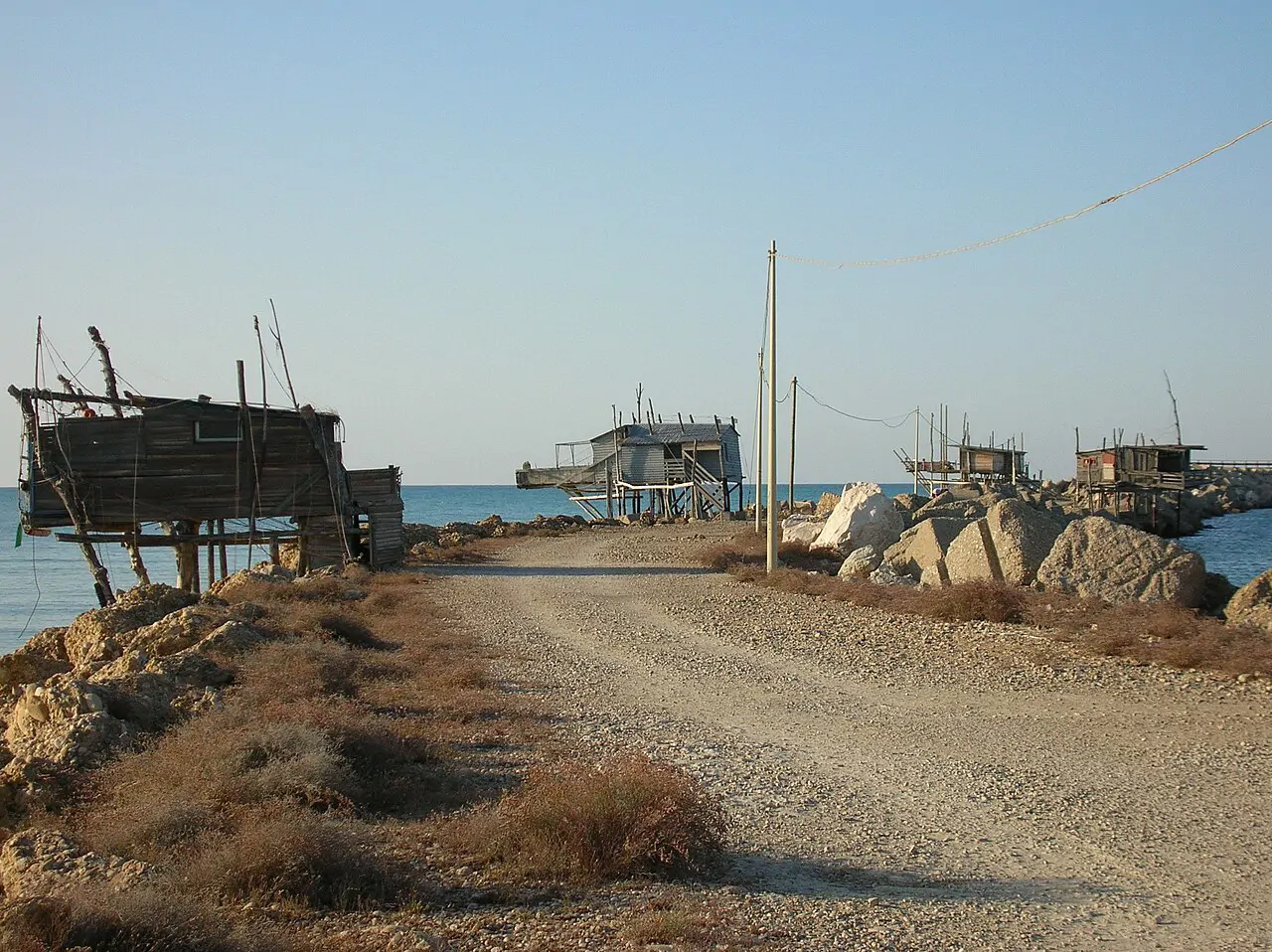
Below Ortona the Abruzzo coast changes its trade. The wide sand of the beach clubs ends and a low cliff begins, made of shingle coves, headlands covered in scrub and inlets you reach on foot. Above the water, anchored to the rocks, stand the wooden machines that give the stretch its name: the trabocchi.
What a trabocco is
A trabocco is a timber platform reaching out over the water, with two long arms that lower a net in the middle. It was a way of fishing without a boat: you hauled the net up when the fish passed over it, and you could do it even in rough seas. They were the tools of families who could not afford a boat, and they were rebuilt after every storm. D'Annunzio, who lived at San Vito, described one as a colossal spider.
About twenty are left today. Some are still used for fishing, others have become restaurants: you eat, out over the water, whatever ended up in the net that day, which means there is no proper menu. You book, because the seats are few by definition.
The cycle path
The Adriatic railway ran at the water's edge until it was moved inland, and the Via Verde was built on the old line: forty-two kilometres, almost all flat, without traffic, with lit tunnels and the sea a few metres away. It is open in sections and the works move about, so it is worth checking beforehand which stretches are rideable. Where it is finished it is the easiest thing there is for cycling with children.
Where to stop
Punta Aderci, above Vasto, is a nature reserve with one of the few beaches left wild on the Adriatic. The abbey of San Giovanni in Venere, at Fossacesia, stands on a knoll of olive trees with the sea in front of it. And the Ripari di Giobbe, below Ortona, are coves you can only reach by walking down, which is why they stay empty.