
A third of the region under protection
Three national parks, one regional park and some forty reserves. Abruzzo protects a higher share of its own territory than any other Italian region, and you notice it as soon as you leave the motorway.
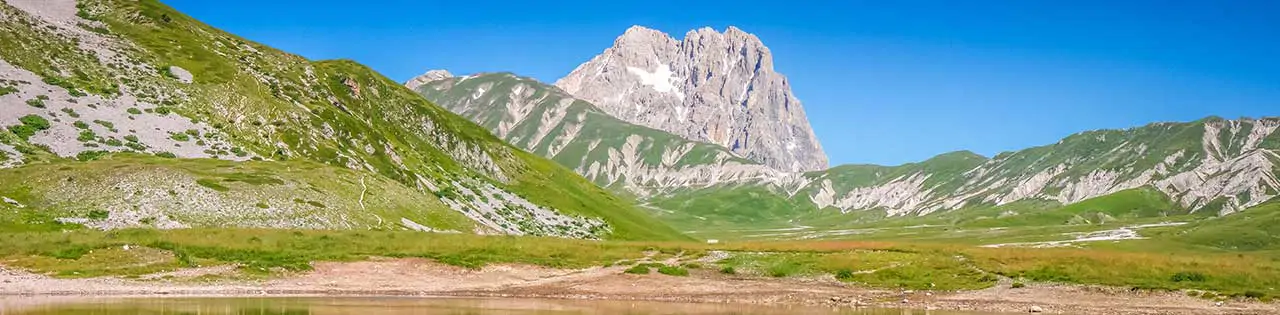
Abruzzo is made of three parallel strips that touch each other: the coast, the hills, the mountains. They are narrow, and that changes how you visit. From a campsite on the Teramo shore you can be at two thousand metres before lunch and back in the sea in the afternoon. That is not a tourist board boast, it is a matter of kilometres: the region is barely a hundred across.
The mountains are the largest part
The mountains are the largest part, and the most unexpected. The Gran Sasso and the Maiella are not Apennine hills: they are two limestone massifs with vertical walls, plateaus at eighteen hundred metres, and the Corno Grande, which at 2,912 metres is the highest summit in the mainland Apennines. Below its north face lies the Calderone, the southernmost glacial body in Europe, which has shrunk so far in recent years that glaciologists have stopped calling it a glacier.
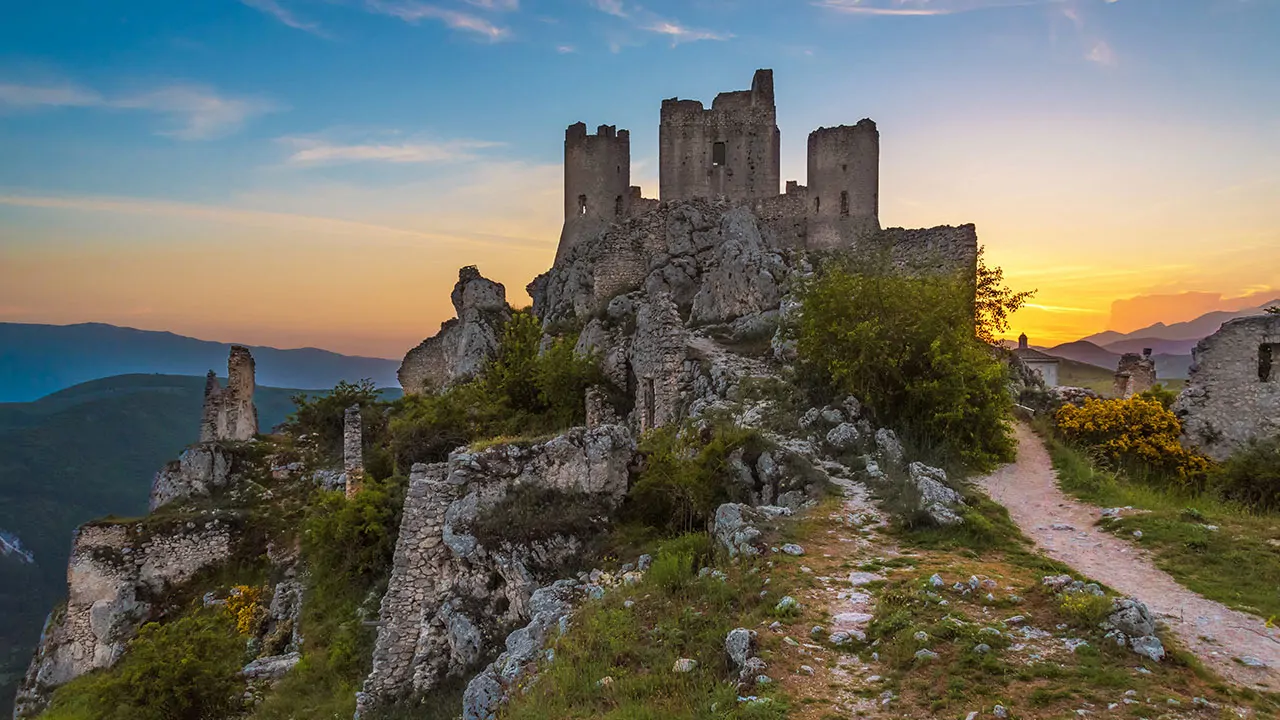
There are three national parks. The Abruzzo, Lazio and Molise National Park dates from 1922, one of the first in Italy, and it is home to the Marsican brown bear: around fifty animals, which is the entire population left in the world. The Gran Sasso e Monti della Laga park is the largest of the three. The Maiella, which the Romans called the mother mountain, is full of hermitages carved into the rock and of gorges so narrow that the sun reaches the bottom for two hours a day.
The coast, which splits in two
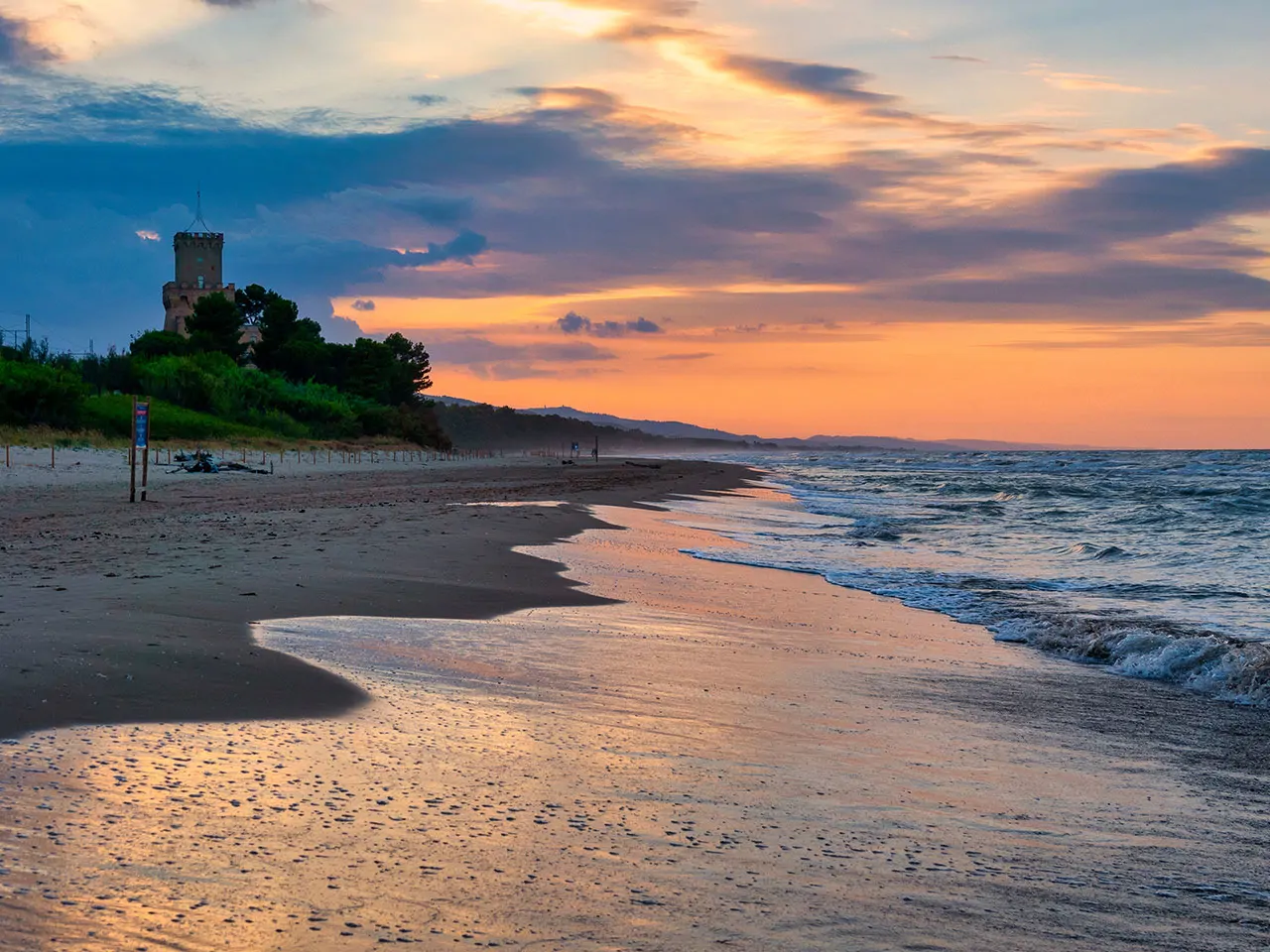
The coast runs for a hundred and thirty kilometres and divides into two halves that look nothing alike. North of Pescara it is wide, unbroken sand, with pine woods behind it and beach clubs along it: that is where most of the campsites are. To the south begins the coast of the trabocchi, where the Adriatic railway once ran at the water's edge and a cycle path has taken its place, open in sections, between shingle coves and the wooden fishing machines that give the stretch its name.
The interior, which emptied out
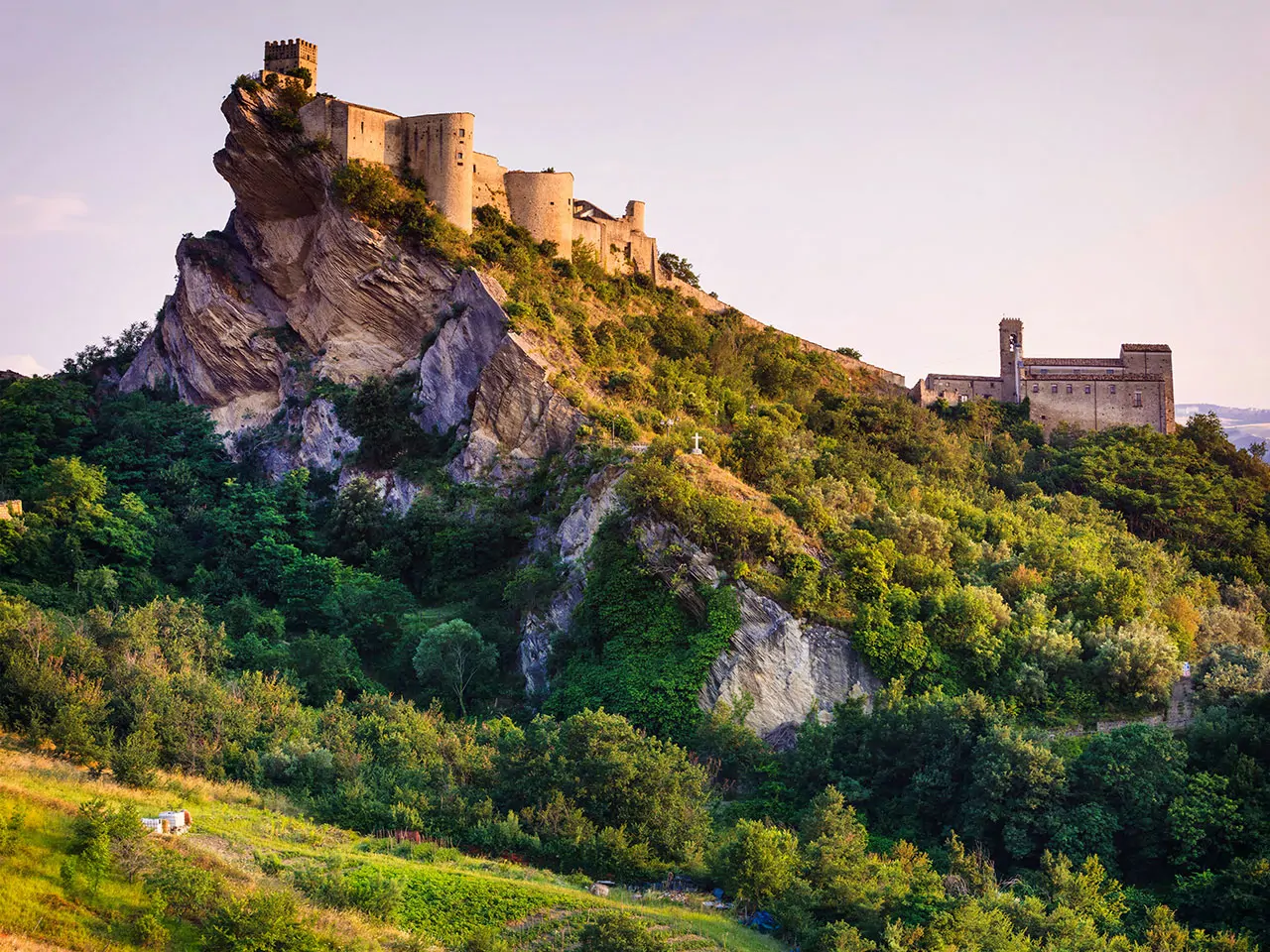
What strikes first-time visitors, though, is not the figures: it is how empty it is. The inland villages lost people for a century, and many of them feel half deserted even in August. Santo Stefano di Sessanio, Calascio, Pacentro and Anversa degli Abruzzi are stone villages that stayed as they were because nobody had the money to change them, and that is exactly why people go there today.